Fereydoon Moshiri
Poet of love, peace, friendship and serving mankind.
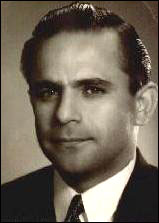
Young Fereydoon Moshiri
Fereydoon Moshiri was born in September 1926 in the capital city of Tehran, Iran. His family was known to have a legacy of poetry and whereas his father held administrative posts his school years were divided between Tehran and Mashhad.
With the outbreak of the world war II the family moved to Tehran and the young Moshiri continued his education in Dar-ol Fonoon and then in Adib high school. Throughout these years his first poems appeared in progressive journals such as Iran-e-Ma. This was the beginning of a career in literary journalism that continued for more than thirty years. In 1946 Moshiri joined the Iranian department of Telecommunication where he served till retirement. In 1954 Moshiri married Eghbal Akhavan, then a student painting at Tehran University. [***]
Before he was a poet, Fereydoon Moshiri was a journalist and this occupation helped him to get acquainted with the influential scholar of Persian language and literature such as Ala'me Dehkhoda, Dr. Moein and Ibrahim Pourdavoud.
Moshiri started poetry with Love and Romance when he was a young boy. He published his volume of poetry titled "Teshne-ye Toofan" (Thirsty for the Storm) in the spring of 1955 in Tehran. Two years later, this book revised with some new added poems and published under a new title: "Naayaafteh" (Unfound).
The way Moshiri was taken is the final objective of the originators of the Free Style and poetry. It means that he was accepted to use rhymes in a suitable and rational manner and combine it with a new look at Nature, Things and Persons around, along with a delicate feeling and sensation, to present his poems with a characterized feature.
In 1961, a collection of his poems was under "Abr" (Cloud) published, which was later reprinted for several times under the title "Abr-o Koocheh" (Cloud and The Alley) as a request by his publisher.
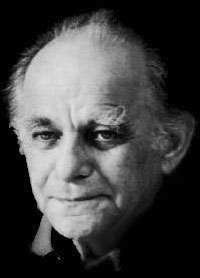
Fereydoon Moshiri
Reflections of Man's feeling towards his life and death, love and destiny, social environment and the whole universe have been the main theme for the selected poems of "Bahar ra baavar kon" (Believe The Spring) published in 1967.
"Az Khaamooshi" (Of Silence) published in 1978; the book covers human's common pains and sufferings in the 20th century. Peace and friendship, love and serving mankind as a whole have been the foundation of Moshiri's poetry in his next book called "Aah Baraan" (Oh, The Rain) published in 1988, and his last published work, "Ta Sobh-e Tobnak-e Ahura'i" (Until the Bright Ahuric Dawn) in 2001).
Moshiri is best known as conciliator of classical Persian poetry at one side with the New Poetry initiated by Nima Yooshij at the other side. One of the major contributions of Moshiri's poetry, according to some observers, is the broadening of the social and geographical scope of modern Persian literature. [***]
In October 1997, Moshiri read many of his best poems at a gathering at the University of California, Berkeley. He was a true writer, a researcher, a great editor and columnist for the poetry pages of many magazines and newspapers.
Moshiri, had been suffering from Leukemia and Renal Failure for almost five years and finally passed away at the early hours on Tuesday, October 24, 2000 in "Tehran-Clinic" hospital.
*** Extracted from www.fereydoonmoshiri.org
The Secret
From the realm of sea
With maternal love
Rushed to sandy shores,
Water.
Round the sand she turned
Washed away the gloom
Off its dusty face,
Water.
Of the sand dwellers,
I am not aware,
What the sandy shore
Told the tender wave.
That to kill herself,
Time and time again
Hit her head against
Rock and stone and sand,
Water.
Translated by: Faranak Moshiri
Summer 2001
Forever With You
Being with you,
Near, far,
Starving or well-fed,
Free, captive,
Full of sorrow or joy,
The essence of my existence.
A moment spent without you,
May there never be!
To die for your glory,
By your side,
The purpose of my death.
The purpose of my life.
Being with you,
Always with you,
Existing for you,
The meaning of love.
The pathway of my fate.
Translated by: Faranak Moshiri
Summer 2001
Let us be humans
A dove was nipping seeds,
A weeping willow was dancing,
A sparrow was building a nest,
The Sun was watching.
From atop the aspen trees, dawn was returning.
With swallow's merriment, daytime was beginning.
Nature's musicians freely lay on this wide-open grass,
Making music in Dastan and Nava' modes.
The meadow was decorated like butterfly wings.
The colorful butterfly, flew here and there, Spring.
I've witnessed that in every particle of matter
There's indeed someone's loving soul, someone's bright breath!
This pure and caring soul is blown into all.
This bright breeze pours out of earth's heart
And blows on all.
If eyes are to both the visible and invisible keen,
They would see the commotion within this scene.
Sun, like a mothcr, full of kindness, gleams.
Down the sky's pure mirror, light streams.
Earth's heart beats to the same tune as Time.
Soundwaves of music of growth! 0, what joyful chime!
Clouds arrive, full of giving and self-sacrifice.
Bestow their necklaces to the fields of rice!
So that grass may sing refreshed, river cries.
To turn sap into rosewater, water tries!
Soil toils to let seeds sprout!
Wind dances so buds may sing aloud!
Bird sings so that rock is not alone,
Sun strives to make amber from the stone!
From afar, grapevine steals kisses from the sun, in hundreds.
So that sheaves of grapes may grow, in hundreds!
Cedar helps the newly rising morning glory
Climb up her branches.
Blissful are those who worship sun and earth
For there's only love and kindness, no hostilities, no hatred.
Suddenly, tears well up in my eyes
I choke in my burning chest, ah!
But why then can we not be this way?
Come to our senses and wish to be humans.

 |
|